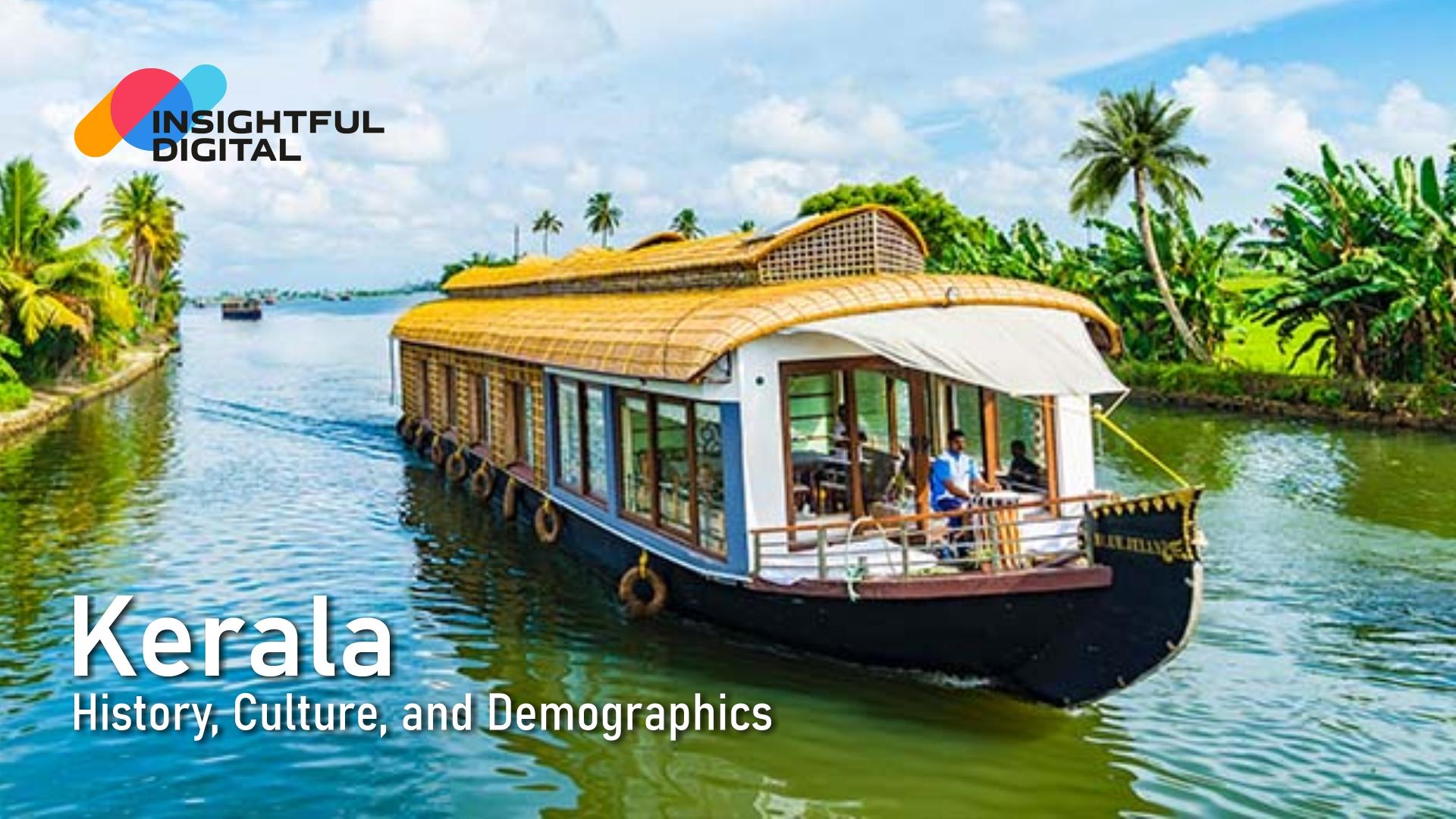
Kerala, located on the south-western coast of India, is often called “God’s Own Country” due to its lush greenery, backwaters, pristine beaches, and rich cultural traditions. Bordered by the Arabian Sea on the west and the Western Ghats on the east, Kerala is one of the most literate and progressive states in India.
The state was formed on 1st November 1956 under the States Reorganization Act, merging Travancore, Cochin, and Malabar regions. Its capital, Thiruvananthapuram (Trivandrum), is a cultural and educational hub. Kerala is widely known for its high literacy rate (over 96%), advanced healthcare, tourism, Ayurveda, and global remittances from its large expatriate community.
For exam aspirants, Kerala holds importance due to its ancient spice trade, contributions to literature and science, socio-political movements, high human development index, and natural beauty.
Historical Significance
- Kerala has a long history of trade with Romans, Arabs, and Chinese due to its spice wealth (black pepper, cardamom).
- In the medieval period, Chera dynasty ruled the region.
- Later, Travancore and Cochin kingdoms became prominent.
- Kerala played an important role in India’s freedom movement with leaders like Ayyankali, K. Kelappan, and EMS Namboodiripad.
- It was the first Indian state where a communist government came to power democratically (1957).
- Monuments like Bekal Fort, Padmanabhapuram Palace, Jewish Synagogue (Kochi), and St. Francis Church reflect its diverse cultural past.
Geography & Location
- Area: 38,863 sq. km.
- Borders: Karnataka (north), Tamil Nadu (east), Arabian Sea (west).
- Rivers: Periyar, Bharathapuzha, Pamba, Chaliyar.
- Climate: Tropical, heavy monsoon rainfall.
- Important Cities: Thiruvananthapuram, Kochi, Kozhikode, Kollam, Thrissur, Alappuzha, Kannur, Palakkad.
- Districts (14): Thiruvananthapuram, Kollam, Pathanamthitta, Alappuzha, Kottayam, Idukki, Ernakulam, Thrissur, Palakkad, Malappuram, Kozhikode, Wayanad, Kannur, Kasaragod.
Culture & Traditions
- Art & Dance: Kathakali, Mohiniyattam, Theyyam, Kalaripayattu (martial art).
- Festivals: Onam, Vishu, Thrissur Pooram, Christmas, Eid.
- Cuisine: Appam, Puttu, Kerala Sadhya, Malabar Parotta, Fish curry, Payasam.
- Crafts: Coir products, mural paintings, ivory carvings, Aranmula Kannadi.
- Traditional Attire: Mundu and Kasavu saree.
Language & Literature
- Official Language: Malayalam.
- Other Languages: Tamil, Konkani, Kannada, Tulu, English.
- Notable Writers: Thunchaththu Ezhuthachan, Kumaran Asan, Vallathol Narayana Menon, O. V. Vijayan, M. T. Vasudevan Nair, Arundhati Roy.
- Folk Literature: Vadakkan Pattukal, Aithihyamala.
Demographics & Society
- Population: ~3.6 crore (2011 Census: 3.34 crore).
- Literacy Rate: 96.2% (highest in India).
- Urban vs. Rural: High urbanization, yet rural areas are well-developed.
- Major Religions: Hinduism, Islam, Christianity.
- Society: Known for social justice movements, matrilineal traditions, gender development.
Economy & Development
- Agriculture: Coconut, spices, rice, banana, rubber.
- Industries: Coir, handloom, IT, tourism.
- Remittances: Strong diaspora income from Gulf, US, Europe.
- Tourism: Backwaters, Ayurveda, Munnar, Wayanad, Kovalam, Varkala.
Education & Institutions
- Universities: University of Kerala, CUSAT, Calicut University, Mahatma Gandhi University.
- Research Centers: Vikram Sarabhai Space Centre, Sree Chitra Tirunal Institute, RGCB.
- Specialty: Known for 100% literacy campaigns and educational reforms.
Tourist Attractions
- Backwaters: Alleppey, Kumarakom.
- Beaches: Kovalam, Varkala, Bekal.
- Hill Stations: Munnar, Wayanad.
- Temples & Monuments: Padmanabhaswamy Temple, Guruvayur, Bekal Fort, Mattancherry Palace.
- Wildlife Parks: Periyar Sanctuary, Silent Valley.
Why Kerala is Important
- Political: Pioneer in communist governance and social reform.
- Cultural: Rich art, dance, festivals.
- Economic: Diaspora remittances, tourism, spice trade.
- Social: Highest literacy, advanced healthcare, gender equality.
Conclusion
Kerala stands as a shining example of education, equality, culture, and natural beauty. From the backwaters and Kathakali to Ayurveda and IT hubs, Kerala is a blend of tradition and progress. For students, Kerala’s history, social movements, literature, and cultural identity make it a vital state in understanding India’s unity in diversity.
Objective Questions for Competitive Exams
Q.1. Kerala was formed on which date?
a) 15th August 1947
b) 1st November 1956
c) 26th January 1950
d) 14th April 1957
Answer: b) 1st November 1956
Q.2. Which is the capital city of Kerala?
a) Kochi
b) Thiruvananthapuram
c) Kozhikode
d) Thrissur
Answer: b) Thiruvananthapuram
Q.3. Which dance form is Kerala famous for?
a) Bharatanatyam
b) Kathak
c) Kathakali
d) Odissi
Answer: c) Kathakali
Q.4. Kerala has the highest literacy rate in India. Approximately what percentage?
a) 72%
b) 80%
c) 90%
d) 96%
Answer: d) 96%
Q.5. Which ancient dynasty ruled Kerala in early history?
a) Chalukyas
b) Cheras
c) Cholas
d) Pandyas
Answer: b) Cheras
Q.6. The famous Padmanabhaswamy Temple is located in:
a) Kochi
b) Thiruvananthapuram
c) Palakkad
d) Kozhikode
Answer: b) Thiruvananthapuram
Q.7. Kerala is world-famous for which martial art?
a) Gatka
b) Silambam
c) Kalaripayattu
d) Thang-Ta
Answer: c) Kalaripayattu
Q.8. Which is the main river of Kerala?
a) Godavari
b) Krishna
c) Periyar
d) Narmada
Answer: c) Periyar
Q.9. The famous festival “Onam” is celebrated in memory of which legendary king?
a) Asoka
b) Mahabali
c) Vikramaditya
d) Krishnadevaraya
Answer: b) Mahabali
Q.10. Vikram Sarabhai Space Centre is located in:
a) Kochi
b) Thiruvananthapuram
c) Bengaluru
d) Chennai
Answer: b) Thiruvananthapuram
Q.11. The famous hill station “Munnar” in Kerala is especially known for:
a) Coffee Plantations
b) Tea Plantations
c) Rubber Plantations
d) Coconut Plantations
Answer: b) Tea Plantations
Q.12. Which is the northernmost district of Kerala?
a) Kasaragod
b) Kannur
c) Kozhikode
d) Malappuram
Answer: a) Kasaragod