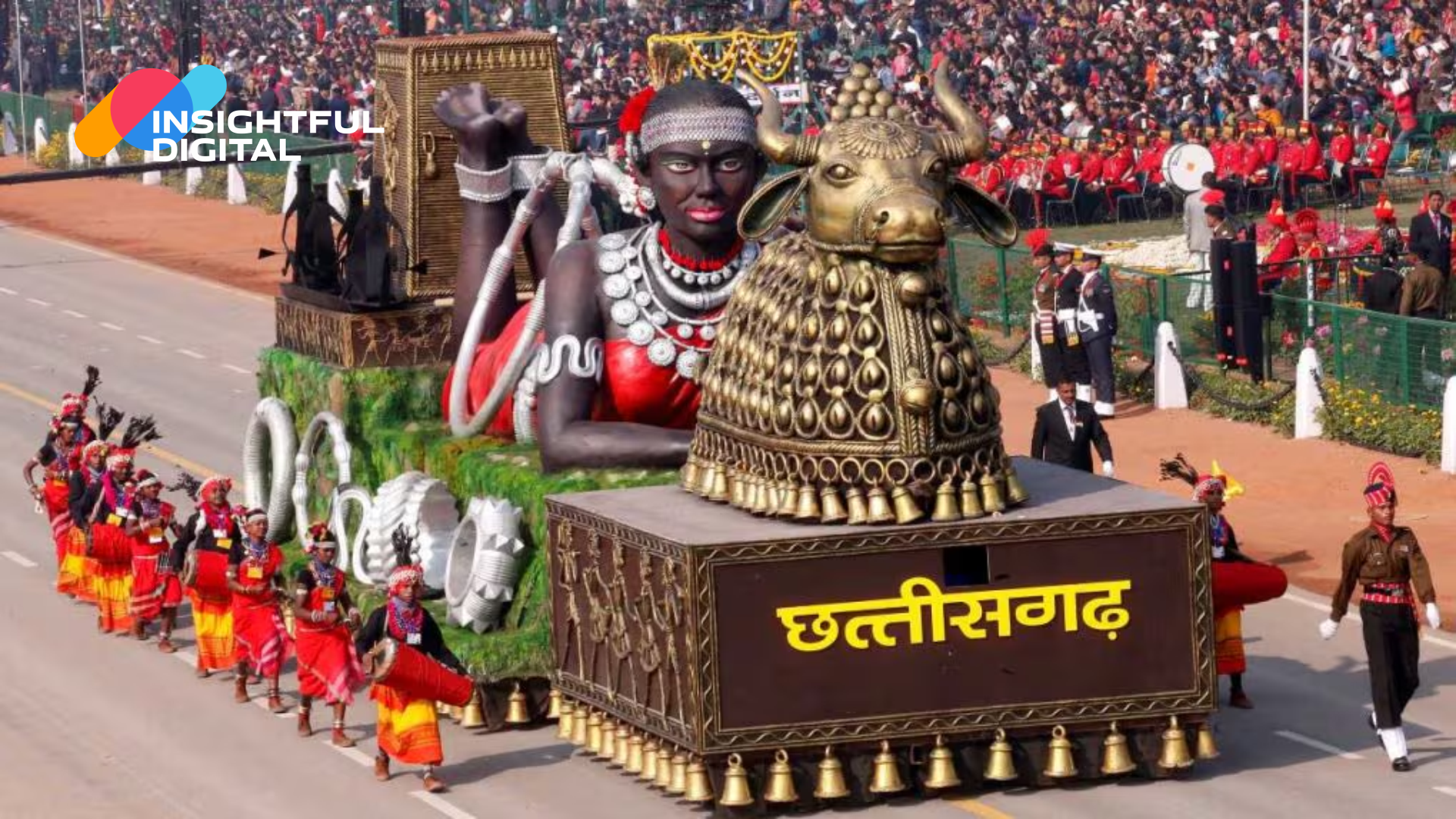
Chhattisgarh, often called the “Rice Bowl of India”, is one of the most mineral-rich and culturally vibrant states of India. Formed on 1st November 2000 after being carved out of Madhya Pradesh, it has quickly established itself as an important hub for energy, agriculture, and tribal culture. With its lush forests, waterfalls, ancient temples, and tribal heritage, Chhattisgarh represents the essence of India’s natural beauty and diversity.
The state is strategically significant because it produces a major share of India’s coal, iron ore, steel, and electricity. At the same time, it is home to 36 forts (Chhattisgarh literally means “Land of 36 Forts”), ancient temples like Bhoramdeo and Rajim, and UNESCO heritage sites like Sirpur.
Culturally, Chhattisgarh is famous for its tribal traditions, folk dances like Panthi and Raut Nacha, handicrafts, and cuisines. The majority of its population lives in villages, and a large section belongs to tribal communities such as Gond, Baiga, Oraon, and Muria.
For students and competitive exam aspirants, Chhattisgarh holds great importance. It is a state rich in history (from Satavahana and Kalachuri dynasties to freedom fighters like Veer Narayan Singh), geography (forests, rivers, minerals), and culture (tribal art and dance). Moreover, its role in India’s industrial and energy sector makes it a frequent topic in GK, Geography, History, and Current Affairs.
Thus, Chhattisgarh is both a cultural treasure and an economic powerhouse, playing a vital role in India’s growth and identity.
Historical Significance
Chhattisgarh’s history dates back to ancient times, with evidence of habitation from the Stone Age. The region was part of Dakshina Kosala in ancient texts and finds mention in the Ramayana and Mahabharata.
Ancient Period:
- The region was ruled by the Maurya Empire and later by the Satavahanas, Vakatakas, and Gupta dynasties.
- Chhattisgarh was a prominent Buddhist and Shaivite center, with Sirpur emerging as a famous Buddhist seat during the 6th–10th centuries CE.
Medieval Period:
- The Kalachuri dynasty (10th–14th centuries) left behind numerous temples, forts, and inscriptions.
- The state gets its name from the 36 forts (Garhs) constructed during this era.
Colonial & Freedom Struggle:
- During British rule, Chhattisgarh remained relatively less industrialized but was exploited for its forest and mineral resources.
- Freedom fighter Veer Narayan Singh of Sonakhan led a rebellion against British exploitation and became the first martyr of Chhattisgarh.
Today, heritage sites like Sirpur ruins, Bhoramdeo Temple, Rajim, and Ratanpur forts narrate the glorious past of Chhattisgarh.
Geography & Location
- Area: ~135,192 sq km (9th largest state in India).
- Borders: Uttar Pradesh, Jharkhand, Odisha, Telangana, Andhra Pradesh, Maharashtra, and Madhya Pradesh.
- Rivers: Mahanadi, Indravati, Hasdeo, Shivnath, Arpa.
- Climate: Tropical monsoon with hot summers, heavy rainfall, and mild winters.
- Natural Resources: Rich in coal, iron ore, bauxite, dolomite, limestone, forests, and water resources.
- Important Cities: Raipur (capital), Bilaspur, Durg, Bhilai, Korba, Jagdalpur, Raigarh, Rajnandgaon.
- Districts (33): Balod, Baloda Bazar, Balrampur, Bastar, Bemetara, Bijapur, Bilaspur, Dantewada (South Bastar), Dhamtari, Durg, Gariaband, Gaurela-Pendra-Marwahi, Janjgir-Champa, Jashpur, Kabirdham (Kawardha), Kanker (North Bastar), Kondagaon, Korba, Koriya, Mahasamund, Mungeli, Narayanpur, Raigarh, Raipur, Rajnandgaon, Sukma, Surajpur, Surguja, Manendragarh-Chirmiri-Bharatpur, Khairagarh-Chhuikhadan-Gandai, Mohla-Manpur-Ambagarh Chowki, Sakti, Sarangarh-Bilaigarh
Culture & Traditions
- Dance & Music: Panthi Dance (Satnami tradition), Raut Nacha (performed during Diwali by Yadav community), Sua Nacha, and tribal folk music.
- Festivals: Hareli, Pola, Teeja, Bastar Dussehra (unique 75-day festival), Rajim Kumbh Mela.
- Cuisine: Rice, chana, curd-based dishes, fara, chila, red ant chutney (tribal specialty).
- Attire: Women wear Lugda and Kanchhora, men wear Dhoti-Kurta.
- Crafts: Bell metal (Dhokra art), bamboo crafts, terracotta, tribal jewelry.
Language & Literature
- Official Language: Hindi.
- Regional Language: Chhattisgarhi (widely spoken), along with tribal languages like Gondi, Halbi, Kurukh, and Bhatri.
- Literature: Folklore and oral traditions dominate. Modern writers like Padumlal Punnalal Bakshi contributed to Hindi and Chhattisgarhi literature. Tribal folk songs and epic storytelling remain integral.
Demographics & Society
- Population: ~2.94 crore (Census 2011: 2.55 crore, projected ~3.2 crore in 2025).
- Density: ~189 per sq km.
- Literacy Rate: ~71%.
- Urban vs Rural: Predominantly rural (~77%).
- Religions: Hinduism (majority), Islam, Christianity, and tribal faiths (animism, Sarna, etc.).
- Communities: Gond, Baiga, Muria, Oraon, Halba, and non-tribal populations.
Economy & Development
- Agriculture: Rice (major crop), maize, pulses, oilseeds.
- Industries: Iron and steel (Bhilai Steel Plant), cement, aluminum, power generation.
- Energy Hub: Major producer of coal and electricity in India.
- Tourism: Bastar tribal culture, waterfalls, Sirpur ruins, Bhoramdeo Temple.
- Plays a major role in India’s industrial output and power sector.
Education & Institutions
- Major Universities: Pt. Ravishankar Shukla University (Raipur), Guru Ghasidas University (Bilaspur), Kushabhau Thakre Journalism University, Hidayatullah National Law University, NIT Raipur, AIIMS Raipur, IIM Raipur.
- Literacy initiatives and government schemes focus on tribal and rural education.
Tourist Attractions
- UNESCO Tentative Sites: Sirpur Buddhist ruins.
- Temples & Heritage: Bhoramdeo Temple, Rajim temples, Ratanpur fort.
- Nature & Wildlife: Chitrakote Falls (Niagara of India), Teerathgarh Falls, Kanger Valley National Park, Indravati National Park.
- Cultural Attractions: Bastar Dussehra, tribal markets, Dhokra craft villages.
Why This State is Important
- Political Importance: Central location in India; strong tribal representation.
- Cultural Importance: Rich tribal heritage, unique festivals, traditional crafts.
- Economic Importance: Major hub for coal, steel, power, and agriculture.
- National Contribution: Backbone of India’s energy and mineral economy.
Conclusion
Chhattisgarh is a land where tribal traditions blend with industrial progress. From the ancient Buddhist sites of Sirpur to the bustling Bhilai Steel Plant, from Panthi dance to Dhokra crafts, from the dense forests of Bastar to the Chitrakote Falls, Chhattisgarh is a treasure trove of heritage and natural wealth.
For students, exam aspirants, and travelers, Chhattisgarh is essential to understand India’s economic backbone, tribal diversity, and cultural richness. Truly, it is the heartland of India’s traditions and resources.
Objective Questions for Competitive Exams
Q.1. When was Chhattisgarh formed as a separate state?
A. 1998
B. 2000
C. 2002
D. 2005
Answer: B. 2000
Q.2. What does the name Chhattisgarh mean?
A. Land of Rivers
B. Land of Forests
C. Land of 36 Forts
D. Land of Warriors
Answer: C. Land of 36 Forts
Q.3. Who was the first martyr of Chhattisgarh’s freedom struggle?
A. Birsa Munda
B. Veer Narayan Singh
C. Tantia Bhil
D. Rani Durgavati
Answer: B. Veer Narayan Singh
Q.4. Which is the capital of Chhattisgarh?
A. Bilaspur
B. Durg
C. Jagdalpur
D. Raipur
Answer: D. Raipur
Q.5. Chitrakote Waterfall is located on which river?
A. Mahanadi
B. Indravati
C. Son
D. Hasdeo
Answer: B. Indravati
Q.6. Which folk dance is associated with the Satnami community?
A. Raut Nacha
B. Panthi
C. Sua Nacha
D. Karma
Answer: B. Panthi
Q.7. Bhilai Steel Plant is famous for producing?
A. Cement
B. Power
C. Steel
D. Aluminum
Answer: C. Steel
Q.8. Sirpur in Chhattisgarh is known for which religion’s ruins?
A. Jainism
B. Buddhism
C. Hinduism
D. Christianity
Answer: B. Buddhism
Q.9. Which is the largest tribe in Chhattisgarh?
A. Oraon
B. Baiga
C. Gond
D. Halba
Answer: C. Gond
Q.10. Which national park in Chhattisgarh is famous for wild buffaloes?
A. Kanha
B. Indravati National Park
C. Kanger Valley
D. Achanakmar
Answer: B. Indravati National Park
Q.11. Bastar Dussehra is celebrated for how many days?
A. 10 days
B. 15 days
C. 30 days
D. 75 days
Answer: D. 75 days
Q.12. Which art form of Chhattisgarh is internationally renowned?
A. Madhubani
B. Warli
C. Dhokra (Bell Metal Craft)
D. Pattachitra
Answer: C. Dhokra (Bell Metal Craft)